
Embarking on the exploration of Earth's realms is a captivating journey that unveils the complexity and interconnectedness inherent in our planet's diverse systems. From the vast expanses of the oceans to the towering peaks of mountains, and from the lush greenery of forests to the expansive deserts, each realm presents a unique set of conditions and ecosystems. Delving into these realms allows scientists, researchers, and explorers to decipher the intricate web of relationships that define Earth's dynamic nature.
Discovering the Major Domains of Earth
The Lithosphere: Earth's Solid Ground
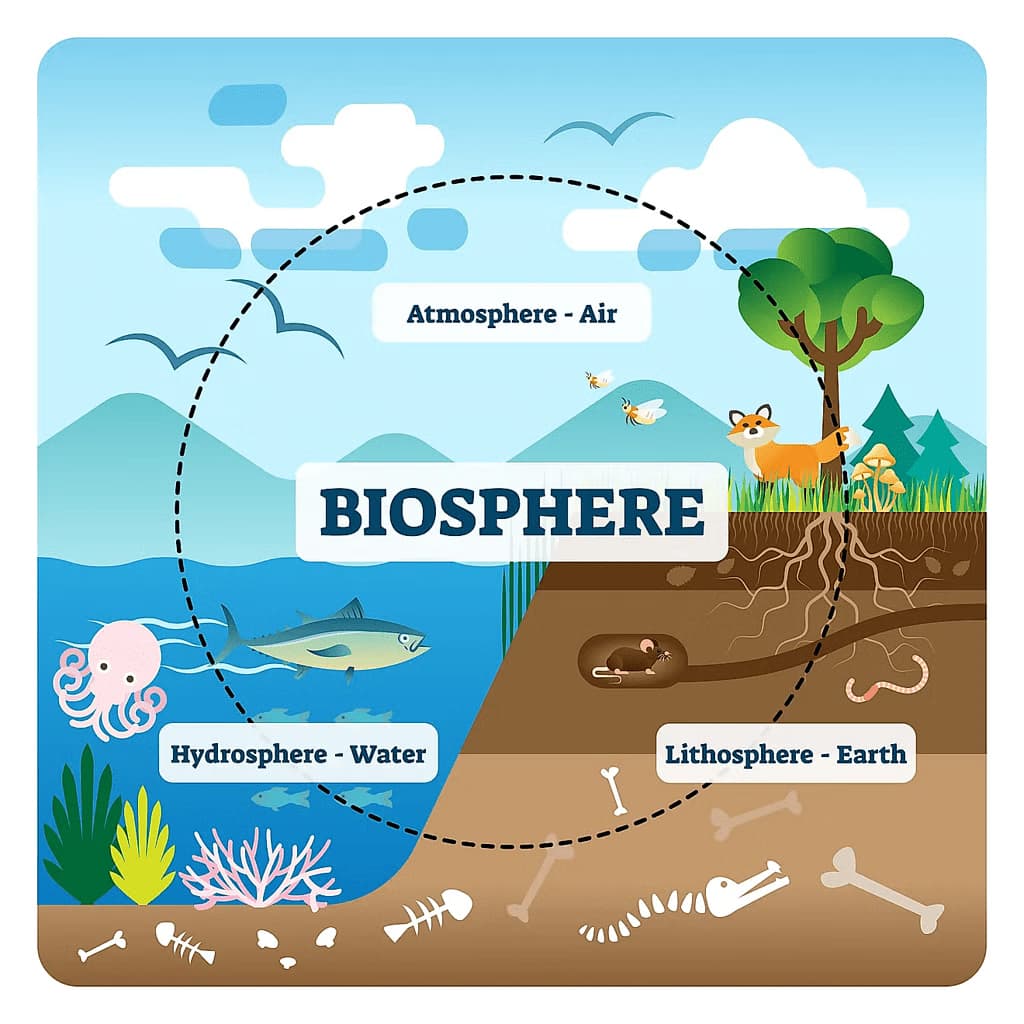
Our journey begins with the lithosphere, which is essentially the solid ground beneath our feet. This domain includes the Earth's crust and the upper part of the mantle. It's where you'll find towering mountains, expansive deserts, lush forests, and vibrant cities. The lithosphere is like Earth's outer skin, and it's full of surprises! The lithosphere is truly unique because it's divided into massive tectonic plates that are constantly shifting. These plate movements are responsible for earthquakes, volcanic eruptions, and the creation of new land.
Life in the Hydrosphere: Oceans and Beyond
Now, let's dive into the hydrosphere, a world of water that covers over 70% of Earth's surface. It's a realm teeming with life, from the tiniest plankton to enormous whales. The hydrosphere includes oceans, seas, lakes, rivers, and even underground water sources. Planet Earth's different worlds are reflected in the diverse ecosystems and species that call the hydrosphere home.
Atmosphere Adventures: Exploring the Skies
Up, up, and away into the atmosphere! This domain envelops the Earth in a blanket of air, providing us with the oxygen we breathe. It's divided into different layers, each with its unique characteristics. The atmosphere is where weather happens, and it's home to birds, planes, and even the International Space Station.
The Biosphere: Where Life Thrives on Earth
Now, let's explore the biosphere, where life thrives in all its diversity. From the tiniest microorganisms to the largest elephants, this domain is the living heart of our planet. The biosphere encompasses ecosystems, where plants, animals, and other organisms interact with one another and their environment.
Beneath Our Feet: Secrets of the Geosphere
Our journey ends in the geosphere, hidden beneath the Earth's surface. This domain encompasses the Earth's inner core, outer core, and the rest of the mantle. It's a place of extreme heat and pressure, where fascinating geological processes shape our planet.
Cool Facts About Earth's Major Domains
-Did you know that the Great Barrier Reef in the hydrosphere is visible from space? It's the world's largest coral reef system and home to a mind-boggling array of marine life.
-The atmosphere's ozone layer protects us from harmful ultraviolet radiation from the sun. Without it, life on Earth would be very different.
-The geosphere is responsible for the formation of valuable minerals, including precious gems like diamonds.
A Kid's Guide to Earth's Different Worlds
Are you ready to explore these amazing domains even further? Let's dig deeper and discover some cool facts and secrets that will leave you in awe.
Lithosphere: A World in Motion
How are mountains formed? Mountains are created by the collision of tectonic plates. When these colossal pieces of the lithosphere push against each other, they can thrust land upward, forming towering mountain ranges.
What's the Earth's largest desert? The Sahara Desert in Africa is the largest hot desert in the world, covering an area nearly as large as the entire United States!
Hydrosphere: Oceans of Mystery
What's the deepest part of the ocean? The Mariana Trench in the western Pacific Ocean is the deepest point on Earth, reaching a mind-boggling depth of about 36,070 feet (10,994 meters).
Why is the ocean blue? The ocean appears blue because water absorbs colors in the red part of the light spectrum and reflects blue and green. This gives the ocean its characteristic color.
Atmosphere: The Breath of Life
How does a tornado form? Tornadoes form when warm, moist air meets cold, dry air, creating a powerful rotating column of air. This extreme weather event can be incredibly destructive.
What's the difference between weather and climate? Weather refers to short-term atmospheric conditions, such as rain or sunshine, while climate describes long-term patterns and averages over a much broader period.
Biosphere: A World of Diversity
What's the largest living structure on Earth? The Great Barrier Reef is not only the largest coral reef but also the largest living structure on Earth. It's so big that it can even be seen from space!
How do animals adapt to their environments? Animals adapt to their environments through a process called natural selection. Over time, those with traits suited to their surroundings are more likely to survive and reproduce.
Geosphere: Earth's Hidden Treasures
What is the Earth's inner core made of? The Earth's inner core is primarily composed of iron and nickel. It's incredibly hot, with temperatures reaching up to 9,932°F (5,500°C).
Why do volcanoes erupt? Volcanoes erupt when pressure builds up beneath the Earth's surface, causing molten rock and gases to burst through the crust. This can result in spectacular volcanic eruptions.
In Conclusion
Earth's domains are as diverse and fascinating as the planet itself. From the solid ground of the lithosphere to the depths of the ocean in the hydrosphere, from the air we breathe in the atmosphere to the thriving life in the biosphere, and the hidden treasures of the geosphere, our planet is a wonder to behold. We hope this cool kids' guide has ignited your curiosity and inspired you to explore Earth's different worlds even further. So, put on your explorer's hat and start your journey of discovery today!
FAQs
What are the four major domains of the earth?
Earth has five primary domains: the lithosphere, hydrosphere, atmosphere, biosphere, and geosphere.
How do these domains interact with each other?
These domains are interconnected and influence each other in numerous ways. For example, the atmosphere interacts with the hydrosphere to create weather patterns, while the lithosphere provides a foundation for the biosphere's ecosystems.
What's the role of the geosphere in our daily lives?
The geosphere plays a crucial role in our daily lives by providing valuable resources like minerals, metals, and fossil fuels. It also influences the Earth's magnetic field, which is vital for navigation.
How can we protect Earth's domains?
Protecting Earth's domains is essential for the well-being of our planet. We can contribute by conserving water, reducing pollution, and supporting efforts to combat climate change.